


Demystifying Business Transition Planning: Beyond the Basics
Business transition planning isn’t just a static document; it’s a dynamic, ongoing process. It guides an organization through significant change by anticipating future needs and developing strategies to navigate shifts. These shifts can include changes in leadership, ownership, technology, or even broader market forces. Ultimately, it’s about ensuring the continued success and longevity of a business, regardless of internal or external pressures. This proactive approach empowers companies to adapt to evolving circumstances with greater agility and resilience.
Types of Business Transitions
Several types of transitions can impact a business. Leadership succession is a key example. Planning for the eventual departure of key leaders ensures a smooth handover of responsibilities and minimizes disruption. Ownership transfers, such as mergers, acquisitions, or internal restructuring, also demand meticulous planning. This helps manage stakeholder interests and integrate potentially different business cultures.
Businesses must also navigate digital transitions, adapting to new technologies and evolving customer expectations. Furthermore, sustainability transformations are increasingly critical. These require businesses to integrate environmental and social considerations into their long-term strategies.
The Importance of Proactive Planning
Why is proactive business transition planning so important? It minimizes disruptions. Organizations with structured approaches experience 70% fewer disruptions during periods of change. This allows them to maintain operational efficiency, preserve stakeholder confidence, and capitalize on new opportunities that may arise.
Change management is a constant in business. Currently, 96% of organizations are undergoing some type of transformation, and 73% anticipate more changes soon. This data underscores the importance of anticipating and strategically planning for change, not just reacting to it.
Components of a Successful Framework
A successful business transition framework comprises several key components. Clear leadership succession protocols are vital for maintaining stability and direction. Structured knowledge transfer systems ensure that valuable institutional knowledge isn’t lost when key individuals depart.
Effective stakeholder communication builds trust and manages expectations during uncertain times. Finally, robust financial planning is crucial for navigating the financial implications of transitions and ensuring long-term stability. These components work in concert to create a robust and adaptable plan. This preparation enables businesses to not just survive change, but thrive in its wake. By planning carefully, businesses can actively shape their future.
Red Flags: When Your Business Needs a Transition Plan Now

A solid business transition plan is crucial for navigating the inevitable changes that come with running a company. But how do you know when it’s time to create or update yours? Ignoring the warning signs can lead to significant disruption and missed opportunities. Recognizing these red flags is the first step toward a more secure future for your business.
Internal Indicators: Recognizing Vulnerability Within
Several internal factors can indicate a pressing need for business transition planning. An aging leadership team without a clear succession plan is a major vulnerability. What happens if a key leader unexpectedly departs? Similarly, if knowledge is concentrated in the hands of just a few individuals, the business is at risk. Losing one of these key employees could mean losing crucial expertise.
A lack of documented processes is another significant internal indicator. This can hinder operational efficiency and complicate transitions. Essential tasks may rely on the knowledge of specific individuals, rather than on clearly defined systems. Finally, persistent employee dissatisfaction or high turnover can signify deeper issues. A formal transition plan that addresses these problems, including succession planning and leadership development, can improve business continuity.
External Pressures: Adapting to a Changing Landscape
External pressures can also necessitate business transition planning. Market disruptions, such as the emergence of new competitors or shifting consumer preferences, require businesses to be nimble. Failing to adapt can result in decreased market share and reduced profitability.
Regulatory changes also demand careful planning and strategic adjustments. New laws or industry regulations can significantly impact a business’s operations. Furthermore, economic downturns can expose weaknesses in a business model. A well-defined transition plan allows for greater financial flexibility and resilience in challenging times.
To help you identify areas for improvement, we’ve compiled a table highlighting some common warning signs.
Key Risks and Mitigation Strategies in Business Transition Planning
| Warning Sign | Category | Risk Level | Recommended Action |
|---|---|---|---|
| Aging leadership team with no succession plan | Internal – Leadership | High | Develop a robust succession plan, including mentoring and leadership development programs. |
| Key knowledge is concentrated in a few individuals | Internal – Knowledge Management | High | Document processes, cross-train employees, and implement knowledge management systems. |
| Lack of documented processes | Internal – Operations | Medium | Document standard operating procedures for all critical business functions. |
| High employee turnover or dissatisfaction | Internal – Human Resources | Medium | Conduct employee surveys, implement retention strategies, and address underlying causes of dissatisfaction. |
| Emerging competitors or disruptive technologies | External – Market | High | Conduct market research, analyze competitor strategies, and develop innovative solutions. |
| New industry regulations or compliance requirements | External – Regulatory | Medium | Review and update compliance procedures, and seek expert advice. |
| Economic downturn or recession | External – Economic | High | Develop a financial contingency plan, explore cost-cutting measures, and diversify revenue streams. |
This table provides a starting point for assessing your business’s transition planning needs. Consider these warning signs and take proactive steps to address any vulnerabilities.
The Cost of Inaction: Real-World Consequences
Failing to plan for transitions can have dire consequences. Businesses may experience decreased profitability, loss of market share, and in some cases, complete failure. Even global efforts, such as climate change mitigation, are increasingly emphasizing the importance of transition plans. By 2025, 36% of companies plan to create or update their climate change transition plans to align with international goals.
Waiting too long to address succession planning, for instance, can create a leadership vacuum, hindering decision-making and impacting employee morale. Similarly, neglecting to adapt to market changes can lead to declining sales and ultimately business closure.
Assessing Your Readiness: Taking Proactive Steps
To evaluate your business’s readiness for transition, consider the following questions:
- Leadership Stability: Is there a clear succession plan for key leaders?
- Knowledge Management: Are processes and critical information documented?
- Market Awareness: Are you actively monitoring market trends and potential disruptions?
- Financial Health: Can your business weather economic downturns or unexpected expenses?
Honest answers to these questions will reveal areas requiring immediate attention in your business transition planning. Addressing these proactively can significantly reduce risks and position your business for long-term success.
Building Your Business Transition Framework That Actually Works

Moving past theoretical models requires a practical business transition framework. This framework serves as a roadmap, guiding your company through changes. The goal? Minimize disruption and maximize potential opportunities. A well-designed framework provides the tools and strategies to manage every aspect of a business transition: human resources, operations, and finances.
Leadership Succession and Knowledge Transfer
Leadership succession is a cornerstone of any effective transition. This involves identifying and nurturing future leaders within your organization. The goal is to prepare them for critical roles. This proactive approach ensures continuity and minimizes disruptions when leadership changes occur.
Equally important is establishing knowledge transfer systems. Think of it as safeguarding your company’s collective wisdom. These systems capture and share vital institutional knowledge. This ensures valuable information isn’t lost when employees depart.
Stakeholder Communication and Financial Considerations
Open communication is crucial during transitions. Keeping stakeholders—employees, customers, and investors—informed builds trust. Regular updates help manage expectations and reduce uncertainty. Transparency is the key to maintaining confidence and a shared sense of purpose.
Financial planning is equally crucial. A strong framework incorporates financial planning to assess costs. It helps identify funding sources and manage cash flow. This ensures stability during the transition and prevents financial surprises.
Timelines, Milestones, and Flexibility
Realistic timelines and milestones are essential. They provide measurable goals and help track progress. They allow for regular evaluation and adjustments. But flexibility is just as important. A rigid framework can’t handle unexpected issues. Building in contingencies allows for adaptation without jeopardizing the overall plan.
Building the Right Transition Team
The right transition team is crucial for success. This team should include people with diverse skills and viewpoints. Think internal experts paired with external advisors. External advisors offer objective perspectives and can challenge assumptions, helping avoid blind spots.
The importance of transition planning extends beyond internal operations. Consider the rise of climate transition plans. As of 2024, 36% of companies are developing these plans. This reflects a growing focus on sustainability and corporate social responsibility.
Integrating Transition Plans with Business Strategies
Finally, integrate the transition plan with your broader business strategies. This ensures the transition supports your overall vision and operational goals. Aligning the transition with existing objectives creates a unified approach. This strengthens the business for the long run. This integration helps secure resources and ensures the transition contributes to long-term company success.
The Human Element: Managing Emotions During Transitions
Business transition planning involves more than just strategy and logistics; it’s about people. Even the most carefully constructed plans can succeed or fail based on the human element. Understanding and addressing emotional responses to change—from excitement to apprehension—is crucial.
Addressing Resistance and Uncertainty
Transitions naturally create uncertainty, which can lead to resistance. Some employees might worry about their job security, while others may resist changes to established routines. Addressing these concerns proactively is essential.
Transparent communication about the reasons for the transition and its impact on individual roles can reduce anxiety. Giving employees opportunities to express their concerns and contribute to the process fosters a sense of ownership, minimizing resistance and building buy-in.
Maintaining Morale and Building Trust
Maintaining team morale is vital during change. Acknowledging the emotional challenges of transitions and celebrating small victories can boost morale. Leaders need to be visible and empathetic, offering support and guidance throughout the process.
Openly and honestly addressing concerns builds trust, which is essential for a smooth transition.
Identifying and Developing Emerging Leaders
Transitions offer unique opportunities for leadership development. Identifying and empowering emerging leaders strengthens the transition process and builds future capacity.
This might involve providing mentorship, specialized training, or assigning new responsibilities that allow individuals to demonstrate their skills. These emerging leaders can then promote the transition within their teams, creating a more positive and collaborative environment.
Knowledge Transfer and Cultural Preservation
Effective knowledge transfer programs are crucial. They ensure valuable institutional knowledge isn’t lost, especially during leadership changes. This could involve documenting processes, creating mentorship programs, or using technology to capture and share expertise.
Transitions shouldn’t erase existing company culture. While change is necessary, preserving positive cultural elements builds team cohesion and provides continuity. Leaders should consider the company’s values and traditions, integrating them into the new way of working.
Effective Communication Frameworks
A clear communication framework is essential for managing emotions. This framework should outline the frequency and methods of communication, ensuring all stakeholders receive timely and accurate information.
Regular updates, town hall meetings, and online forums can keep everyone informed and involved. This consistent communication reduces speculation and anxiety, creating a more positive transition experience. This, in turn, boosts productivity and engagement, even during challenging times. Through a proactive and empathetic approach to the human side of change, businesses can ensure a smoother, more successful transition for everyone.
Integrating Sustainability Into Your Transition Strategy
Modern business transition planning now prioritizes sustainability. It’s no longer a separate initiative, but a core component of a successful transition. This shift acknowledges that environmental, social, and governance (ESG) factors greatly influence long-term business viability and resilience.
Aligning With Evolving Regulatory Requirements
Integrating sustainability into your business transition planning helps your company adapt to changing regulatory landscapes. Regulations related to emissions, resource use, and social responsibility are becoming more stringent globally. By proactively addressing these requirements, businesses can reduce risks and avoid penalties. This proactive approach also shows corporate responsibility, enhancing brand reputation and attracting ESG-focused investors.
Capitalizing on Emerging Opportunities
Sustainability isn’t just about compliance; it’s about opportunity. The global shift toward a sustainable economy creates new markets and increases demand for eco-friendly products and services. Businesses can capitalize on these emerging opportunities by integrating sustainability into transition plans.
- Developing new product lines
- Improving operational efficiency through resource optimization
- Attracting environmentally conscious customers
The infographic below visualizes projected revenue growth and cash flow forecasts, demonstrating the potential financial benefits of integrating sustainability.
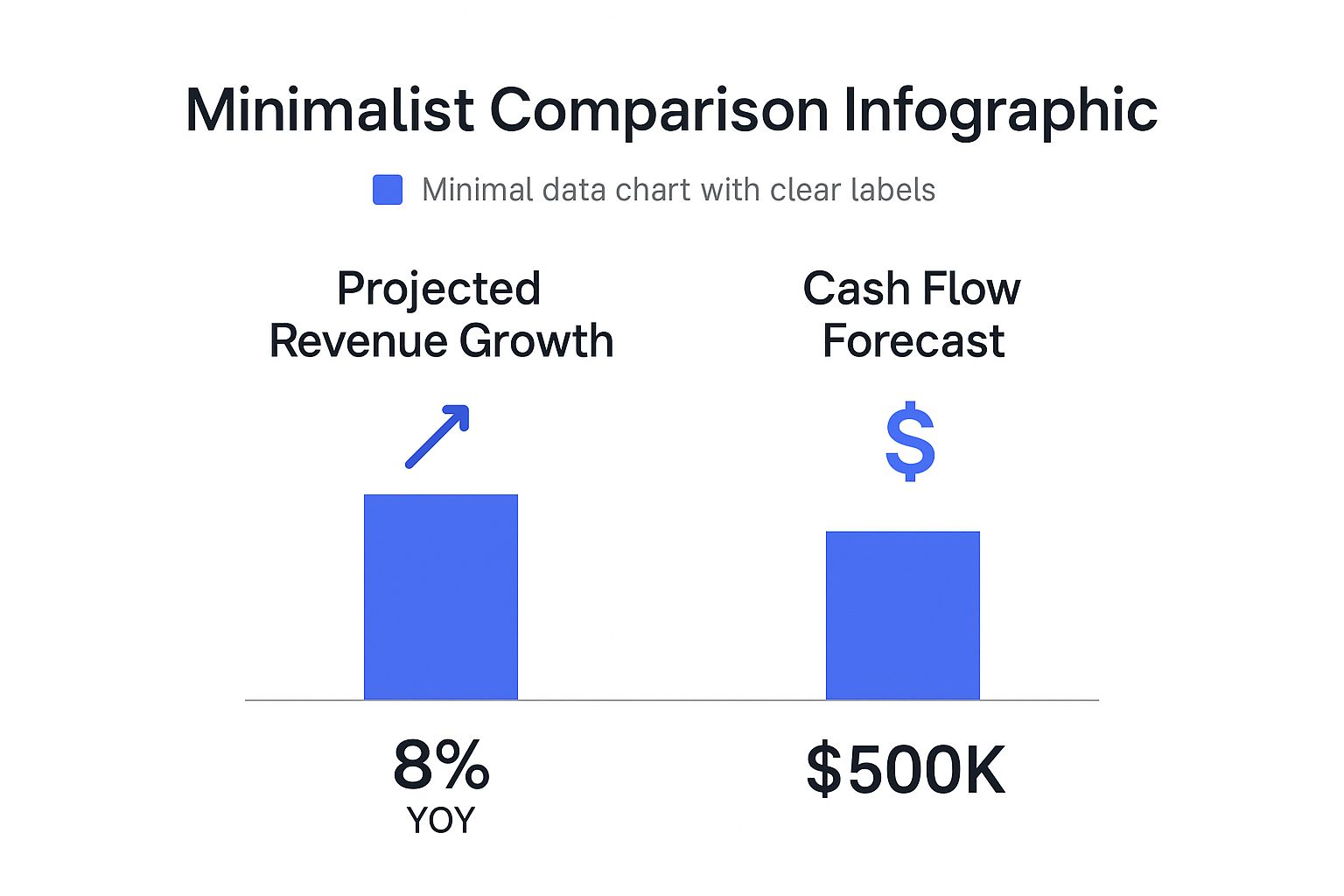
Projected revenue growth of 8% year-over-year aligns with a cash flow forecast of $500,000. This shows how sustainability initiatives can contribute to both top-line growth and bottom-line performance. This positive correlation highlights the potential for long-term value creation.
Businesses are also prioritizing sustainability in their operations. The global focus on energy transition and climate change mitigation is transforming how large businesses source and manage power. This shift is evident in the 44% increase, from 2022 to 2024, in companies disclosing 1.5°C-aligned climate transition plans, with over 5,900 companies now involved. This reinforces the growing importance of robust transition planning.
Climate Risk Assessments and Adaptation Strategies
Effectively integrating sustainability requires understanding potential climate-related risks. Conducting climate risk assessments helps identify vulnerabilities and potential disruptions to operations. This understanding informs the development of adaptation strategies. These strategies might include diversifying supply chains, investing in renewable energy, or implementing water conservation measures.
To further illustrate the shift in business transition planning, let’s look at a comparison of traditional and modern approaches:
Business Transition Planning Elements Comparison
| Planning Element | Traditional Approach | Modern Integrated Approach | Key Benefits |
|---|---|---|---|
| Financial Projections | Focus on short-term profits and shareholder value | Considers long-term value creation, including ESG factors | Enhanced financial resilience and investor appeal |
| Risk Management | Primarily addresses financial and operational risks | Includes climate-related risks and social impact assessments | Improved risk mitigation and long-term stability |
| Operational Efficiency | Seeks cost reductions through traditional methods | Incorporates resource optimization and sustainable practices | Reduced environmental footprint and cost savings |
| Market Analysis | Analyzes current market trends | Considers emerging markets and opportunities related to sustainability | Access to new markets and a competitive advantage |
This comparison highlights the key differences and similarities between traditional and modern approaches. The modern integrated approach offers significant advantages in terms of long-term value creation, risk mitigation, and market positioning.
Integrating Sustainability Into the Broader Framework
Sustainability should be integrated into the broader business transition framework. This creates a cohesive strategy aligned with long-term business goals. By embedding sustainability throughout the transition process – from initial assessments to implementation and monitoring – businesses create a long-term competitive advantage and position themselves for success. This approach addresses environmental and social responsibilities while driving innovation, enhancing brand reputation, and improving financial performance.
Financial Mastery: Funding Your Business Transition Journey

Financial planning is essential for any successful business transition. It can mean the difference between a smooth shift and a disruptive upheaval. Examining successful transitions reveals the financial priorities of seasoned leaders. These priorities encompass accurate valuations, effective tax strategies, and securing the right funding.
Valuation Methodologies and Tax Optimization Strategies
Understanding your business’s true worth is paramount. Accurate valuation methodologies are crucial for informed decision-making during any transition, whether it involves a sale, merger, or internal restructuring. This process offers a clear understanding of your company’s value, allowing you to negotiate effectively and safeguard your interests.
Minimizing tax liabilities is also a key factor. Effective tax optimization strategies can significantly influence a transition’s financial outcome. Exploring various ownership structures or strategically timing the transaction, for example, can lessen the tax burden and boost returns.
Funding Mechanisms for Different Transition Scenarios
Different transitions demand different funding approaches. A leadership succession might involve internal resource reallocation. A merger or acquisition, on the other hand, could necessitate external financing. Identifying the most appropriate funding mechanism is vital. Options include loans, private equity, or venture capital. The right funding source aligns with the transition’s specific needs and goals.
Protecting Business Value During Change
Transitions can breed uncertainty, potentially impacting business value. Strategic approaches can mitigate these risks. Maintaining open communication with key customers and suppliers, for instance, reassures them about the company’s stability. This preserves valuable relationships and protects revenue streams.
Managing Cash Flow for Stability
Cash flow is crucial for any business. Managing it effectively is especially critical during transitions. A detailed cash flow forecast helps anticipate potential shortfalls and enables proactive planning. This could involve negotiating better payment terms with suppliers, diligent monitoring of receivables, or securing short-term financing.
Structuring Deals for Win-Win Outcomes
Transitions often involve complex negotiations. Structuring deals that benefit all stakeholders is essential for success. This involves understanding each party’s interests and finding common ground. In a merger, for example, a deal that fairly values both businesses and offers growth opportunities for employees creates a win-win scenario, fostering a positive transition environment.
Preparing Financial Documentation and Contingency Plans
Comprehensive financial documentation is crucial for smooth transitions. This includes accurate financial statements, projections, and relevant legal agreements. Having this documentation readily available streamlines due diligence, secures financing, and aids informed decision-making.
Anticipating potential challenges is also essential. Robust contingency plans help address unforeseen financial difficulties. This might involve having backup funding sources or identifying cost-cutting measures. Contingency planning provides a safety net, allowing the business to navigate unexpected issues without jeopardizing the transition. By addressing these key financial aspects, businesses can face periods of significant change with increased confidence and resilience.
Measuring Success: Metrics That Matter in Transition Planning
A well-defined business transition plan is essential. But how do you measure its effectiveness? Simply hoping for the best isn’t a strategy. This section explores key metrics that indicate a successful transition, moving beyond vague assessments to focus on quantifiable results. This involves establishing clear benchmarks, implementing robust monitoring systems, and conducting thorough post-transition reviews.
Establishing Meaningful Benchmarks
Before any transition begins, establish clear benchmarks. These serve as your starting point and provide a basis for measuring progress. Benchmarks should be SMART: Specific, Measurable, Achievable, Relevant, and Time-bound. For example, in a leadership transition, benchmarks might include employee retention rates, customer satisfaction scores, or Key Performance Indicators (KPIs) related to specific projects. Setting these baselines allows for an accurate assessment of the transition’s impact.
Implementing Monitoring Systems for Early Detection
Effective monitoring systems are crucial for a smooth transition. They provide real-time data, allowing you to track progress against your established benchmarks. These systems should offer early warnings of potential issues, enabling timely intervention. For instance, a dip in customer satisfaction following a merger could signal a need to adjust communication strategies or address integration challenges.
Real-time performance data empowers you to adapt and refine your transition plan as needed. Think of it as a course correction during a journey. This agility is essential for managing the complexities of change and maximizing the chances of success.
Post-Transition Reviews: Capturing Lessons Learned
After the transition, conduct a comprehensive post-transition review. This is a vital step, often overlooked. The review should assess both tangible outcomes, such as financial performance and operational efficiency, and intangible factors like employee morale and stakeholder satisfaction. This provides a holistic view of the transition’s true effectiveness.
These reviews capture valuable lessons learned, which can inform future organizational changes. Identifying what worked well, what could have been improved, and any unforeseen challenges provides invaluable insights. This continuous improvement approach helps refine your transition planning process, making future transitions smoother. These reviews also create a valuable knowledge base for future leaders and transition teams.
Evaluating Tangible and Intangible Outcomes
Measuring success requires examining both tangible and intangible aspects. Tangible outcomes are easy to quantify. Did revenue increase? Did operational efficiency improve? These are measurable indicators of success.
Intangible factors, though harder to quantify, are equally important. Is employee morale high? Are stakeholders satisfied? These qualitative factors often have a significant impact on long-term success. Assessing both provides a balanced view.
Guiding Continuous Improvement
Post-transition analyses offer valuable data, not just about the specific transition, but also about your organization’s adaptability and capacity to thrive during change. This data informs continuous improvement. By consistently analyzing successes, failures, and the reasons behind them, your business becomes more adept at managing change and using it for growth.
This proactive approach positions your organization for long-term success in a dynamic business environment. Continuously refining your transition planning process allows for greater efficiency, minimizes potential disruptions, and increases the likelihood of achieving your strategic objectives.
Are you ready to streamline your business transition? Acquire.com offers expert guidance and a comprehensive platform to navigate the complexities of buying and selling online businesses.